


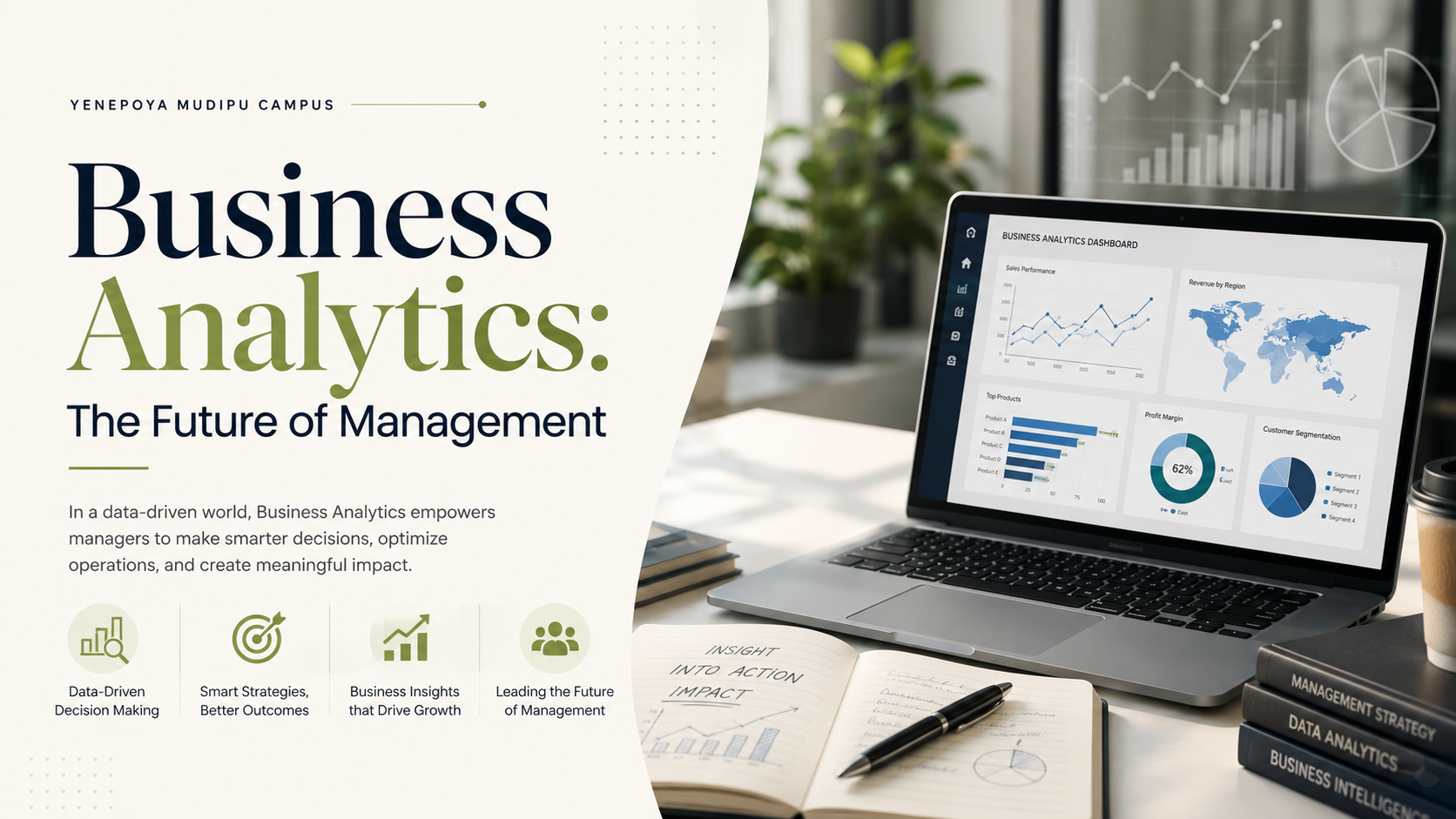
In a hyper-competitive, data-saturated world, instinct and experience alone are no longer enough. Business Analytics is reshaping how managers understand performance, make decisions, manage risk, and guide sustainable growth.
What is Business Analytics?
Business Analytics uses data, statistical methods, and technology to understand past performance, predict future outcomes, and guide better decisions. It connects business strategy, statistics, and information technology.
Descriptive analytics
Understand what has happened by organizing and summarizing historical performance.
Diagnostic analytics
Examine relationships and contributing factors to understand why an outcome occurred.
Predictive analytics
Use patterns and models to forecast what is likely to happen next.
Prescriptive analytics
Evaluate possibilities and recommend the best course of action.
Why analytics belongs at the centre of decision-making
Data-Driven Decision Making
Managers can cut through sales figures, customer behavior, market trends, and operational metrics to make evidence-based decisions.
Competitive Advantage
Organizations can identify opportunities, respond to market shifts, and personalize experiences faster and at scale.
Risk Management
Predictive models help anticipate supply-chain disruptions, financial downturns, and other risks before they materialize.
Efficiency and Cost Optimization
Analytics exposes inefficient processes, improves resource allocation, reduces costs, and strengthens the bottom line.
Enhanced Customer Understanding
Customer data helps businesses tailor products, services, and marketing to preferences, supporting loyalty and long-term growth.
Algorithms do not replace leadership
Tomorrow's managers must interpret dashboards, collaborate with data scientists, and translate analytical insights into strategic action.
Preparing students
Business analytics, data visualization, statistics, and decision science are becoming core elements of management education. Combined with traditional business principles, they prepare adaptable, forward-thinking professionals for a data-driven economy.
The new language of modern management
Business Analytics is not a passing trend. As organizations generate and rely on more data, managers who can interpret, communicate, and act on it will lead their organizations into the future. Embracing analytics today is key to shaping tomorrow's success stories.
